In welding shops, it is easy for workers and supervisors to become distracted by the quality of their work and to consider the quality of the air in their facility secondary. However, this factor plays a central role in the performance, safety, and long-term viability of welding operations.
This underscores the importance of understanding how airborne contaminants behave. You can get a better understanding of them in this blog as we look at the science of clean air in welding environments.
What Happens to Clean Air in Welding Shops
In a welding shop, clean air does not stay clean for long. When a welder strikes an arc, intense temperatures vaporize small amounts of metal and filler material. As this vapor cools, it condenses into fine particulate matter, forming a visible plume above the weld zone. These particles are often less than one micron in diameter, allowing them to remain suspended in the air for extended periods.
Because most fabrication shops operate multiple stations at once, several plumes can rise and overlap throughout the workday. The thermal lift generated by the arc causes fumes to rise before they spread laterally across the facility. Ceiling fans or open bay doors may move the air, but they rarely remove contaminants at the source. Instead, they often redistribute particulates throughout the building.
In addition to welding, many facilities perform grinding, cutting, and finishing tasks in the same general area. These processes generate their own dust and fine debris, which adds to the total airborne load.
Instructional welding labs present similar conditions, especially when numerous students practice simultaneously in close proximity to one another. Over time, these combined activities can create a persistent haze if the facility does not control emissions effectively.
Why Clean Air Is Essential to Your Shop
After reviewing what happens to clean air in your welding shop, we can now look at why it is essential to maintain it. If you do not, it can affect human performance and operational stability.
Clean Air Protects Worker Health
Welding fumes contain complex mixtures of metal oxides and other compounds that can enter the respiratory system. Because many particles remain extremely small, they can travel deep into the lungs when inhaled. Long shifts in poorly ventilated environments can also increase discomfort, irritation, and fatigue.
Clean air also improves day-to-day comfort. Workers who operate in clearer environments often experience less eye and throat irritation during extended projects.
Reduced airborne contamination can also contribute to steadier concentration and fewer workflow interruptions. Health-focused air management demonstrates that a facility values its workforce.
It Helps You Maintain Regulatory Compliance
Industrial ventilation standards establish exposure limits for specific airborne contaminants. Regulatory bodies such as OSHA provide guidance on acceptable concentration levels in occupational settings. Welding facilities must evaluate their air quality and implement control measures that keep exposure within defined limits.
Documented air quality practices also strengthen a company’s position during inspections or audits. Many customers and partners also expect fabrication shops to follow recognized safety standards. By staying compliant, you can reduce risk and support long-term business continuity.
Clean Air Improves Visibility and Work Quality
Welding requires precision, especially in structural or code-regulated applications. Airborne haze can interfere with visibility around the weld joint and adjacent surfaces. Clean air helps maintain clearer sightlines across the workspace.
Improved visibility also supports higher-quality welds and more consistent results. Operators can better monitor bead formation and adjust technique in real time. Reduced visual obstruction can also reduce rework and material waste, thereby improving production efficiency.
It Helps You Protect Your Equipment and Infrastructure
Airborne metal particles eventually settle on machinery, tools, and surfaces. Over time, this buildup can affect sensitive components and increase maintenance demands. Fine dust can enter electrical enclosures or accumulate on moving parts, potentially shortening equipment life.
Cleaner environments also reduce housekeeping burdens. Maintenance teams spend less time removing floor and workstation residue. Lower contamination levels can help preserve finished products before shipment.
How You Can Clean Air in Your Welding Environment
After learning about the science of clean air in welding environments, it’s time to review how you can ensure that there is enough pure, safe air in your shop. Fortunately, facilities can implement several complementary approaches depending on layout, production volume, and budget.
Local Exhaust Ventilation Systems
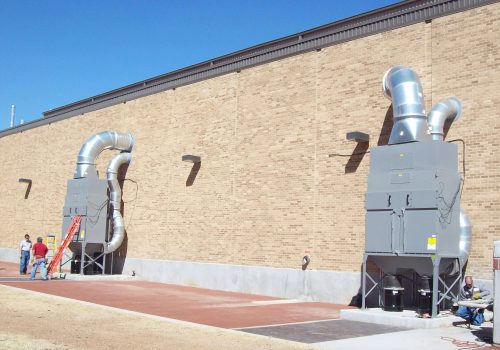
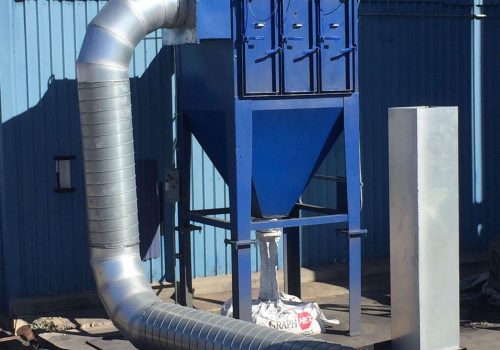
One method is to use local exhaust ventilation systems with hoods, ductwork, and centralized fans to remove contaminants from specific workstations. Engineers design duct runs to maintain appropriate air velocity and balance across multiple branches.
Centralized systems can support larger operations with numerous welding bays. They often connect to a central filtration unit that handles higher airflow volumes. This configuration works well in facilities with fixed layouts and steady production patterns.
General Ventilation and Air Exchange
General ventilation systems can also improve overall air circulation within a building. Roof-mounted exhaust fans or make-up air units can support consistent air exchange. While these systems do not capture fumes at the source, they can reduce background concentrations.
Engineers must evaluate building size, ceiling height, and air change rates when designing these systems. Properly balanced intake and exhaust maintain stable pressure relationships inside the facility. General ventilation works best when paired with targeted source capture methods. Together, these strategies create layered protection.
Air Filtration and Recirculation Units
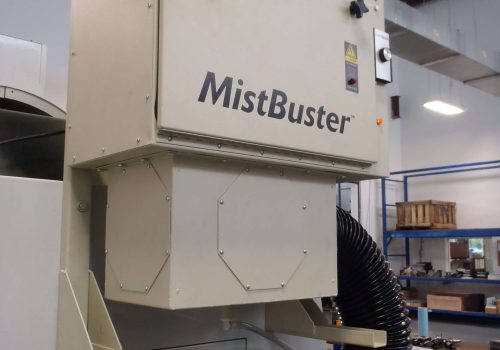
Some facilities install ambient air filtration units that continuously draw in shop air and remove fine particulates. These systems typically mount overhead and operate independently of welding stations. They help reduce lingering haze that escapes primary capture devices.
Recirculating units require high-efficiency filters to ensure that cleaned air meets applicable standards. However, facilities must confirm that filtration performance aligns with regulatory expectations before returning air to the workspace.
Fume Extractors
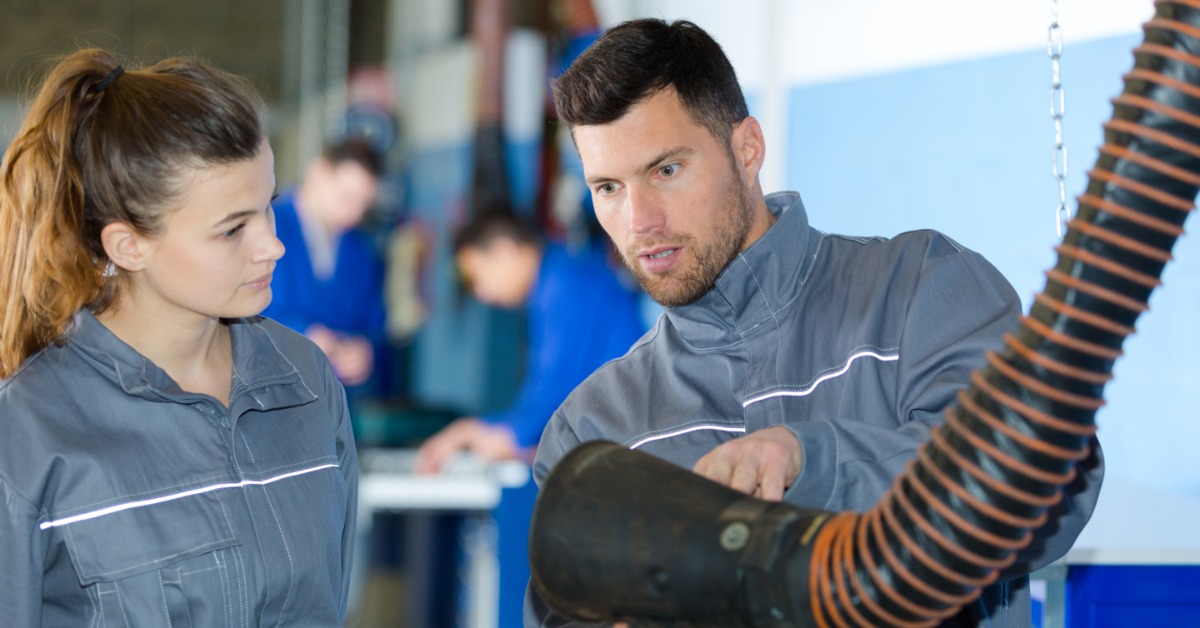
Fume extractors for welding provide direct source capture at or near the weld zone. These systems typically include a capture hood or articulated arm, a fan to generate airflow, and a filtration unit to remove particulate matter. By placing the hood close to the arc, the system intercepts the plume before it rises and spreads. This approach addresses contaminants at their source.
Portable fume extractors allow operators to move the system between stations. Articulated arms hold their positions once adjusted, helping maintain consistent capture efficiency.
Wall-mounted units serve fixed work areas and preserve valuable floor space. When properly sized, these systems create sufficient airflow to overcome the natural upward movement of heated fumes.
Filtration also plays a critical role in overall performance. High-efficiency cartridge filters can capture fine metal particles while allowing cleaned air to pass through. With consistent maintenance, welding shops can ensure that airflow and capture efficiency remain stable over time.
Now that you know how welding environments generate complex airborne contaminants, you can understand why your facility needs a well-engineered control strategy. Welding shops that prioritize source capture, effective filtration, and balanced ventilation nurture safer, more productive workspaces.
WeldFume-Extractors.com can help you improve the air quality in your operation. Contact us today to learn more about our reliable fume extractors and better control emissions.
To provide the best experiences, we use technologies like cookies to store and/or access device information. Consenting to these technologies will allow us to process data such as browsing behavior or unique IDs on this site. Not consenting or withdrawing consent, may adversely affect certain features and functions.
Functional
Always active
The technical storage or access is strictly necessary for the legitimate purpose of enabling the use of a specific service explicitly requested by the subscriber or user, or for the sole purpose of carrying out the transmission of a communication over an electronic communications network.
Preferences
The technical storage or access is necessary for the legitimate purpose of storing preferences that are not requested by the subscriber or user.
Statistics
The technical storage or access that is used exclusively for statistical purposes.The technical storage or access that is used exclusively for anonymous statistical purposes. Without a subpoena, voluntary compliance on the part of your Internet Service Provider, or additional records from a third party, information stored or retrieved for this purpose alone cannot usually be used to identify you.
Marketing
The technical storage or access is required to create user profiles to send advertising, or to track the user on a website or across several websites for similar marketing purposes.